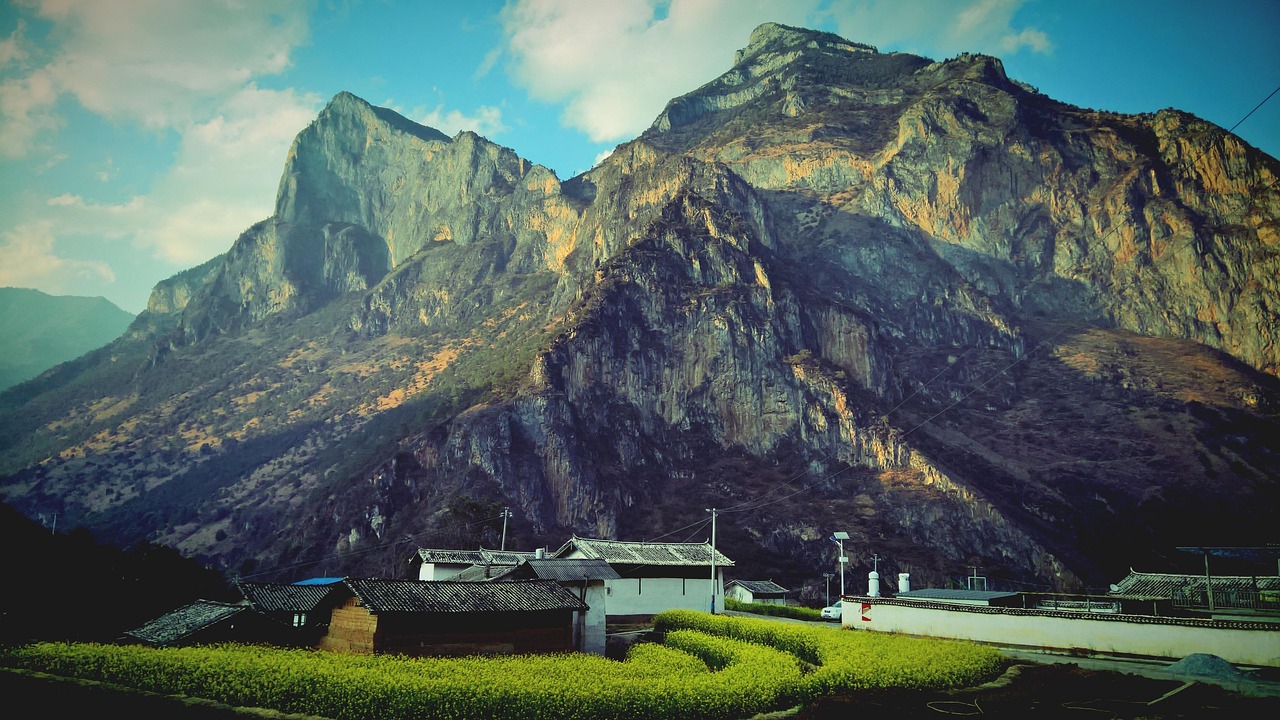
Why this route
This three-day route holds together as a single arc through Southwest China: a Lijiang old-town day, a Shangri-La monastery-and-town day, and a national-park day. Day 1 belongs to Lijiang, anchored by the Old Town of Lijiang and Lijiang Sifang Street and rounded out by Ancient City Zhongyi Market, Lion Hill and Mu Palace. Day 2 shifts the route to Shangri-La and keeps the same town-scale rhythm: Ganden Sumtseling Monastery leads, and the remaining three stops — Dukezong Ancient Town, Guishan Park and Yueguang Plaza — all sit in the Dukezong Ancient Town area. Day 3 then breaks the pattern with a single stop, Potatso National Park.
The day split is what makes the arc work. Days 1 and 2 are built from short blocks — no stop on either day runs longer than three hours — so the two town days total eight hours and five to eight hours respectively and move quickly from sight to sight. Day 3 inverts the structure: with Potatso National Park as its only stop and no duration attached to it, the final day is left entirely open, and the route steps down from five stops to four to one. The sequence also runs from towns to park — two days of old-town and monastery sightseeing, then a closing day with nothing scheduled but the national park.
Day by day
Day 1 — Lijiang. The route opens with two hours in the Old Town of Lijiang, followed by one hour at Ancient City Zhongyi Market. Lion Hill takes the next hour and Mu Palace the one after, before the day’s longest block: three hours at Lijiang Sifang Street. Five stops and a fixed total of eight hours make this the densest day of the three.
Day 2 — Shangri-La. Ganden Sumtseling Monastery comes first at one to two hours, after which the route settles into the Dukezong Ancient Town area: two to three hours in Dukezong Ancient Town itself, one to two hours at Guishan Park, and a closing hour at Yueguang Plaza. Taken at the low end of every range, the day runs five hours; at the high end, eight.
Day 3 — Potatso National Park. The final day schedules nothing besides the park, and the itinerary sets no duration for it, so the visit determines its own length. After two days of multiple short stops, the route closes on a single open-ended sight.
Trade-offs
Day 1 is where the schedule should flex first: it carries five stops and the only fixed eight-hour total on the route. The three one-hour stops — Ancient City Zhongyi Market, Lion Hill and Mu Palace — are the natural cuts, since dropping any one of them frees an hour while leaving the day’s two longer blocks, the Old Town of Lijiang (two hours) and Lijiang Sifang Street (three hours), untouched. Travellers who do better with fewer stops per day should simplify here: a Day 1 that skips the market still keeps the old town, the hill, the palace and the square.
Day 2 calls for range management rather than cuts. Three of its four stops are given as ranges, so the day can run five hours at the low end or eight at the high; anyone who wants more time at Ganden Sumtseling Monastery or Dukezong Ancient Town can take the upper bounds and let Guishan Park fall to its one-hour minimum, with Yueguang Plaza fixed at one hour either way. Day 3 needs no adjustment at all — Potatso National Park is its only stop, so there is nothing on the final day to trim.