Why this route
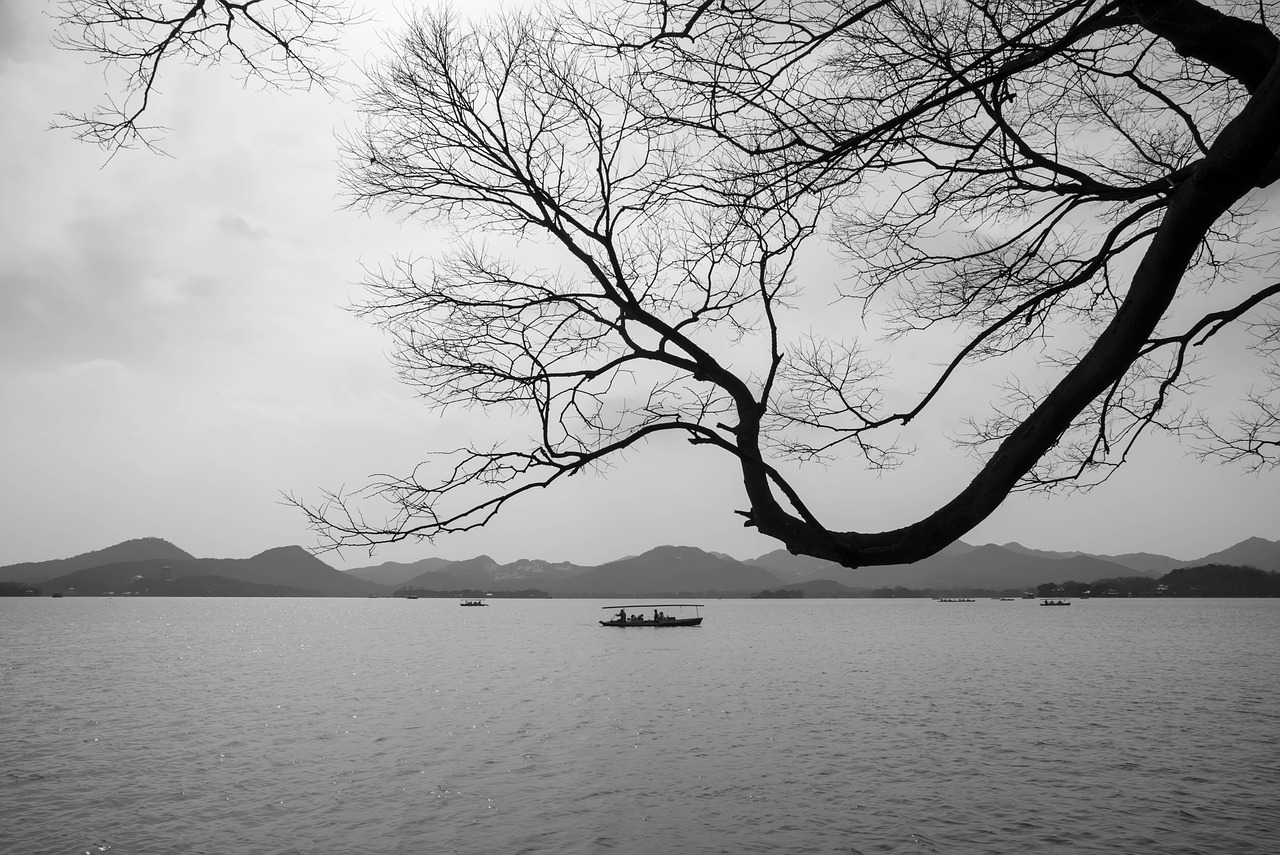
This route works as a single arc that runs from Hangzhou’s most famous water to its grandest, with old stone in between. Day one stays inside the West Lake scenic area — the lake itself, the Yangdi Scenic Route, Gai Jiaotian’s Former Residence, Guo’s Villa and Bayberry Ridge — and every day after that keeps the same two threads: water (the Fuchun River, the Seven-Li Sailing stretch, Thousand Islet Lake) and old settlements or stone (Longmen Ancient Town, Shengao Village, Meicheng Ancient Town, Xinye Ancient Village, the Longyou Grottoes). Travellers consistently favour this shape because each day has one clear anchor, and the anchors escalate — a city lake, a river valley, a vast islet-studded lake, then a pair of stone landmarks to finish.
The day split does the pacing. Day one clears the whole West Lake cluster in a single block, so the city sightseeing never spills into the countryside days. Days two to four are built almost entirely from one-to-three-hour stops — towns, villages, a national forest park, a fishing platform, a sail — which makes them the route’s flexible middle: any stop can stretch into a slow afternoon or compress to an hour. Day five gives Thousand Islet Lake the widest slot of the trip, bracketed by short fixed stops at Osmanthus Island and Manghuayang. Day six is a deliberate two-stop finisher with firm durations — three hours at the Longyou Grottoes, two at Jianglang Mountain — so the route ends on schedule rather than in a scramble.
Day by day
Day one stays inside the West Lake scenic area. The lake itself carries no fixed duration and takes whatever the day allows; the Yangdi Scenic Route runs about an hour, and Gai Jiaotian’s Former Residence another hour. Guo’s Villa and Bayberry Ridge each take one to three hours, which gives the day a flexible back half.
Day two moves out to the Fuchun River, budgeted at one to three hours, alongside Longmen Ancient Town and the Fuchun Taoyuan Scenic Area at one to three hours each. Xinsha Island closes the day with no set duration, making it the natural place to spend whatever time is left.
Day three strings together Shengao Village and Red Lantern Grandma’s Home (one to three hours each), the three-hour Daqi Mountain National Forest Park as the day’s one fixed block, and the Yan Ziling Fishing Platform at one to three hours.
Day four pairs the Seven-Li Sailing stretch, one to three hours, with the three-hour Daci Rock Scenic Area, then eases into Meicheng Ancient Town and Xinye Ancient Village at one to three hours each.
Day five belongs to Thousand Islet Lake. The lake itself is open-ended; the Thousand Islet Lake Stone Forest takes one to three hours; Osmanthus Island and Manghuayang are quick hour-long stops; and the Wenyuan Lion City resort takes one to three hours to finish the day.
Day six is a clean two-stop finish: three hours at the Longyou Grottoes, then two hours at Jianglang Mountain.
Trade-offs
Day five is the tightest day and the first place to flex. It stacks five stops around Thousand Islet Lake, and because Osmanthus Island and Manghuayang are fixed at an hour each, the easiest cut is to drop one or both and let the open-ended lake, the one-to-three-hour Stone Forest and the Wenyuan Lion City resort absorb the time. Days two to four hold the other flex points: each carries four stops, but only Daqi Mountain National Forest Park and Daci Rock Scenic Area are locked at three hours, so a softer stop — Red Lantern Grandma’s Home on day three, or Xinye Ancient Village on day four — is the one to sacrifice when the schedule runs long.
Travellers who need a simpler plan should prune the middle, not the anchors. Keeping day one’s West Lake cluster, one ancient town from the river days (Longmen Ancient Town or Meicheng Ancient Town), and the full Thousand Islet Lake day preserves the route’s theme while shrinking six days toward four or five. Day six’s Longyou Grottoes and Jianglang Mountain sit apart from the lake-and-river core, so they are the cleanest stops to cut entirely when time runs short.