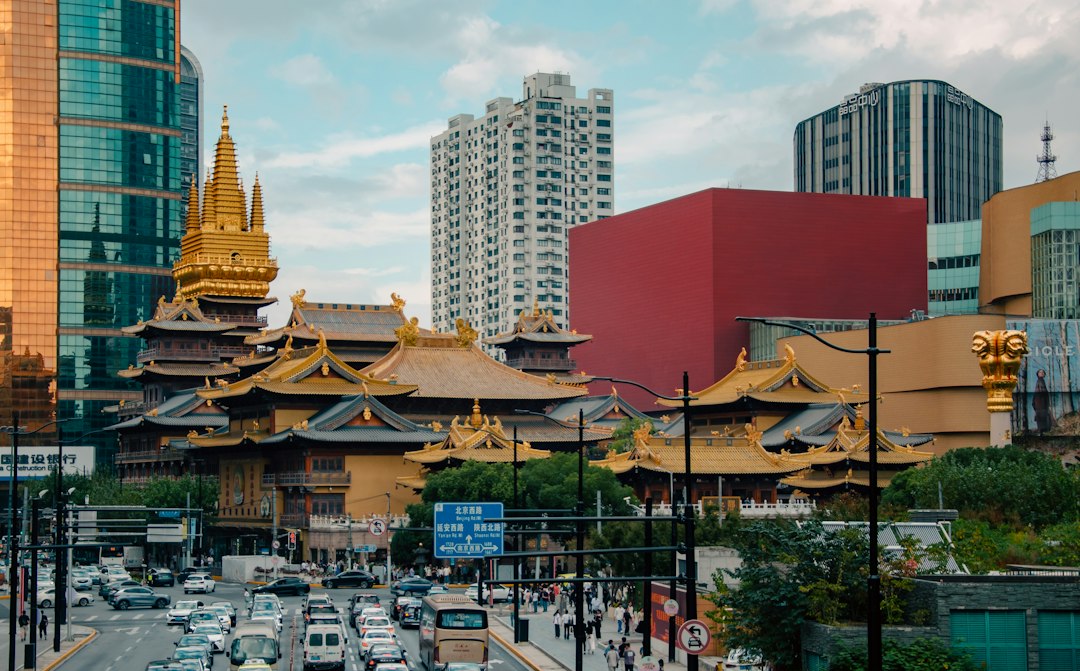
Why this route
These nine days follow the most-travelled East China corridor — Shanghai, Suzhou, Wuzhen, then Hangzhou — and a single theme ties every stop together: the classical water-country culture of the region, set against the modern skyline that only Shanghai supplies. The route opens in the old city around THE CITY TEMPLE OF SHANGHAI, Yu Garden and The Bund, moves through the art museum and lane districts, then up into the towers of Lujiazui and the Oriental Pearl Tower, before older scenery takes over: Suzhou’s temples, gardens and canal-side streets, a full day inside Wuzhen’s two scenic zones, and three days of causeways, pagodas and temple hills around West Lake.
The day split keeps each theme whole instead of interleaving eras. Shanghai gets three distinct days — old city, art and lanes, skyline. Suzhou gets two: the Hanshan Temple, Huqiu Scenic Area and Shantang Street Scenic Area day with its Kunqu evening, and the Humble Administrator Garden, Suzhou Museum and Pingjiang road day that ends at the modern Jinji Lake Scenic Area. Wuzhen gets one uninterrupted day walking both the East and West Scenic Zones. Hangzhou closes with three days that divide the lake’s north and west shores from the south shore and old town, and from the Feilai Feng and LingYin Temple hills that finish at the Qiantang River Bridge. The city days run on timed blocks of half an hour to four hours; the Wuzhen day is sequenced rather than timed, with only the Jiangnan Woodcarving Exhibition Hall carrying an estimate.
Day by day
Day 1, Shanghai. THE CITY TEMPLE OF SHANGHAI takes two hours, with a meal at Lübolang on Yuyuan Road; Yu Garden follows for one hour. Nanjing Road Pedestrian Street then takes three hours, broken by a stop for pan-fried buns at Xiao Yang Shengjian’s Huanghe Road branch, and a final hour at The Bund closes the day.
Day 2, Shanghai. China Art Museum holds four hours, after which the route drops to street scale: two hours in Tianzifang and two more at Xintiandi.
Day 3, Shanghai. Madame Tussauds Shanghai takes three hours, Lujiazui two, and the Oriental Pearl Tower two more.
Day 4, Suzhou. Hanshan Temple takes one hour, Huqiu Scenic Area two, and Shantang Street Scenic Area two more. Dinner is traditional Suzhou cuisine at Deyuelou’s Guanqian branch, followed by two hours of Kunqu opera at the Shantang Kunqu Opera House.
Day 5, Suzhou. The Humble Administrator Garden takes two hours, then noodles at Yuxingji’s Xibei Street branch; Suzhou Museum takes two hours and Pingjiang road one, before two closing hours at Jinji Lake Scenic Area.
Day 6, Wuzhen. The East Scenic Zone comes first — the Jiangnan Hundred Beds Museum, the Jiangnan Folk Museum, the Hongyuantai Dye Workshop, the Jiangnan Woodcarving Exhibition Hall (half an hour to an hour, the day’s only timed stop) and Mao Dun’s Former Residence. The day then crosses to the West Scenic Zone for the Caomu Bense Dye Workshop, Zhaoming Academy, the Wuzhen Post Office, the White Lotus Pagoda and Nühong Street.
Day 7, Hangzhou. The West Lake circuit starts at Duanqiao Canxue, follows the Bai Causeway and spends two hours on Gushan Hill, with lunch at Louwailou’s Gushan Road branch. Quyuan Fenghe takes one hour, the Spring Dawn on Su Causeway continues the walk, Viewing Fish at Flower Harbour takes one hour, and Mao’s Home Port takes two, with dinner at Zhiweiguan Weizhuang on Yanggong Causeway.
Day 8, Hangzhou. Liulang Wenying takes one hour, Leifeng Pagoda two, and Three Pools Mirroring The Moon an hour and a half. Wushan square adds two hours, Hefang Street one, and the day ends at the West Lake Music Fountain.
Day 9, Hangzhou. Feilai Feng takes half an hour and LingYin Temple an hour and a half; the route’s last stop is the Qiantang River Bridge.
Trade-offs
Day 6 is where the schedule flexes, because only one of its ten stops carries a duration — trim there rather than in the timed city days. A traveller short on time can walk just the East Scenic Zone’s cluster (Jiangnan Hundred Beds Museum, Jiangnan Folk Museum, Hongyuantai Dye Workshop, Jiangnan Woodcarving Exhibition Hall, Mao Dun’s Former Residence) and skip the West Scenic Zone’s run of Caomu Bense Dye Workshop, Zhaoming Academy, the Wuzhen Post Office, White Lotus Pagoda and Nühong Street — or the reverse. Day 5 offers a second flex point: the two hours at Jinji Lake Scenic Area sit last in the day, and cutting them leaves the Humble Administrator Garden, Suzhou Museum and Pingjiang road core intact.
Simplify at the city level if nine days is too many: dropping the Wuzhen day turns the route into a clean Shanghai-Suzhou-Hangzhou run, and the three Hangzhou days stand on their own as a lake-and-temples finish. Within Shanghai, anyone unmoved by waxworks can cut Madame Tussauds Shanghai (three hours) and keep the Lujiazui and Oriental Pearl Tower pair, which carries the modern-city day on its own.