Introduction
Guilin is a city in South China that travellers treat less as an urban destination and more as the anchor for a landscape trip. The crawl records 49,728 travellers who have marked the city as visited — a level-C popularity score, verified as of 30 September 2026 — and the routes collected through it run from a single day to eight, with preference clustering firmly at the longer end.
The stop lists across those routes sketch what a Guilin trip actually looks like: two rivers (the Li River and the Yulong River), city landmarks (Elephant Trunk Hill, the Two Rivers and Four Lakes, Dongxi Lane), the Yangshuo side (Xingping Ancient Town, the Ten-Mile Gallery, the Yangshuo Cultural Relics and Landscape Park) and the rice terraces at Longji and Jinkeng. Travellers consistently favour six to eight days to move through it all — a city where the itinerary is measured in river bends and terrace steps rather than museum counts.
Suggested itineraries
Eight routes appear in the crawl, spanning one to eight days, and their choice rates point in one direction. The 8-day routes lead at 67% and 58%, the 6-day routes follow at 66% and 49%, and a 7-day route sits at 45%. Shorter formats trail — 4 days at 39%, 1 day at 39%, 2 days at 34%. Each figure is drawn from a single source route, so treat the percentages as indicative; the pattern, though, is consistent. Travellers favour six to eight days here.
Eight days — the most-travelled shape. The top route in the crawl runs eight days at a 67% choice rate, with a second eight-day route at 58%. The recorded stops give a sense of what that length buys: the city cluster (Elephant Trunk Hill, the Two Rivers and Four Lakes, Dongxi Lane), the river-and-town country around Yangshuo (the Li River, the Yulong River, the Ten-Mile Gallery, Xingping Ancient Town, the Yangshuo Cultural Relics and Landscape Park) and the terraces (Longji and Jinkeng). Eight days is the format with room for all three layers at an unhurried pace.
Six to seven days — the standard choice. A 6-day route posts 66%, nearly level with the eight-day leader, and a 7-day route registers 45%. This is the band most travellers settle on: long enough to span the full spread of stops recorded across the crawl, tight enough to fit a standard holiday.
Four days and under — the taster option. Short formats appear in the data — 4 days at 39%, 1 day at 39%, 2 days at 34% — but they carry the weakest choice rates of the set. Travellers who log full routes through the region consistently pick longer; the short formats read as a first taste rather than the trip itself.
Things to Do
Rivers first. The Li River is the stop that defines the region, and it recurs across the recorded routes alongside the Yulong River — the two waterways travellers consistently build a Guilin trip around. The Ten-Mile Gallery appears in the same stop lists, a scenic corridor that belongs with the river country rather than the city.
Towns and parks. Xingping Ancient Town and the Yangshuo Cultural Relics and Landscape Park supply the built-heritage layer of the itineraries, sitting alongside the river stops in the recorded lists. Dongxi Lane plays the equivalent role on the Guilin side, the third of the city stops.
City landmarks. In Guilin itself, the recorded stops are Elephant Trunk Hill, the Two Rivers and Four Lakes and Dongxi Lane — the city’s landmark hill, its waterway network of two rivers and four lakes, and its old lane. These anchor the urban end of the routes.
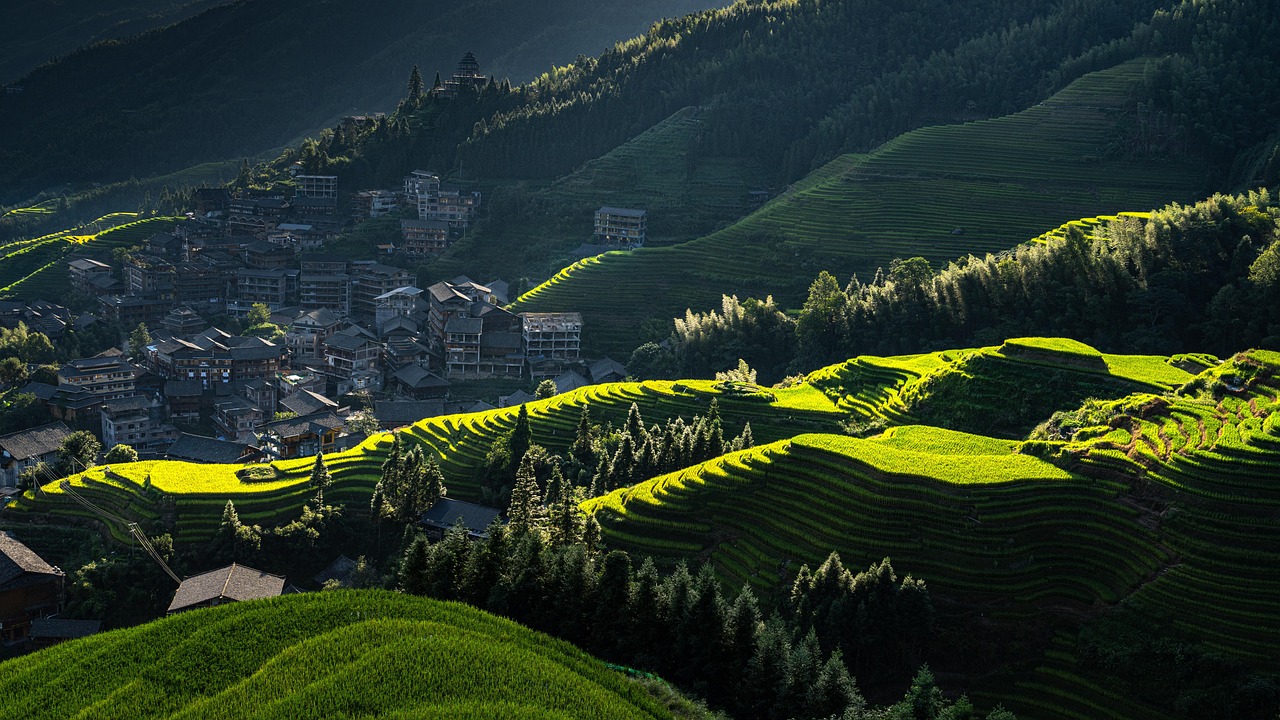
The terraces. Longji Rice Terraces and Jinkeng Rice Terraces complete the picture, the only stops in the crawl that point away from rivers and towns toward terraced farmland. They sit at the opposite end of the stop lists from the city sights, and it is the longer, most-chosen routes that carry them.