Why this route
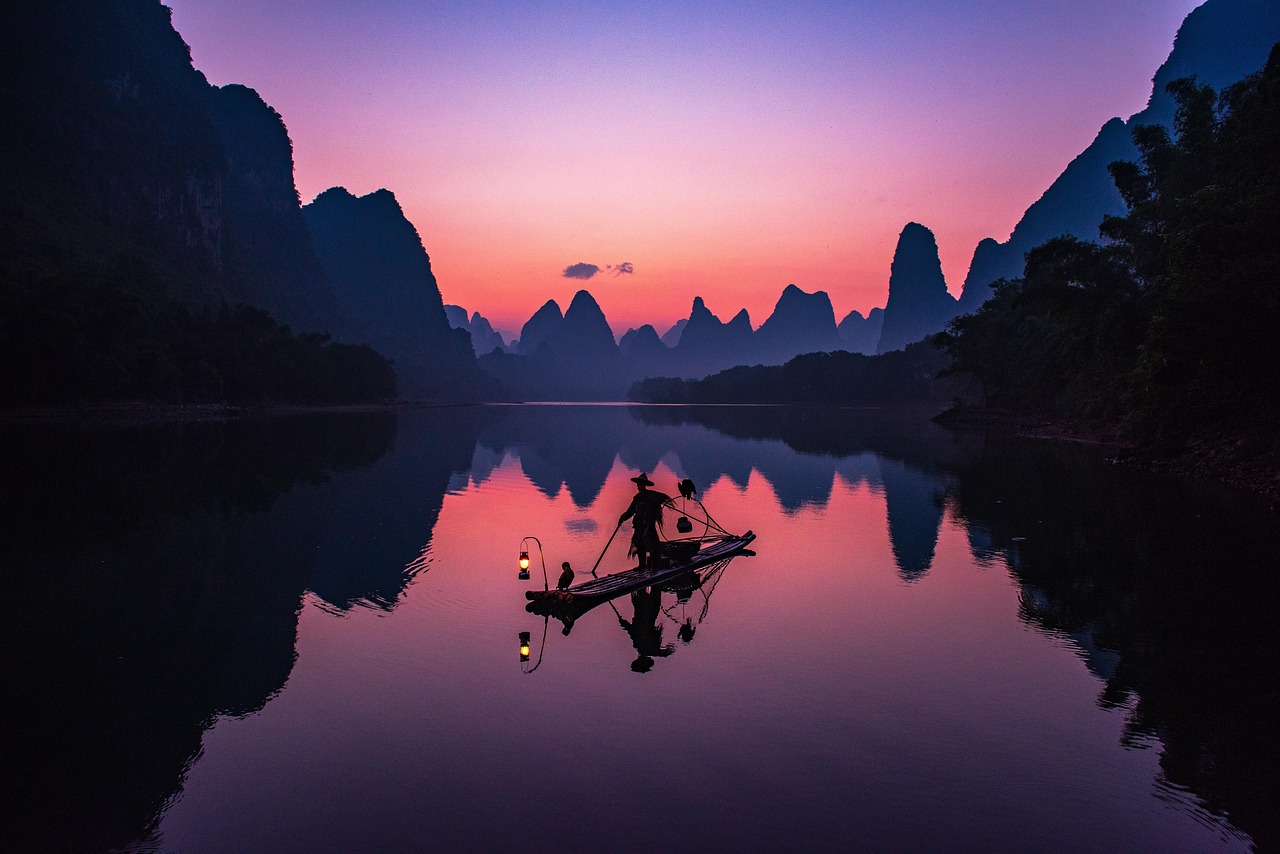
This route works as one loop around Guilin’s karst river country, and water is the thread that ties it together. It opens on the city’s own waterways with Dongxi Lane and three hours on the Guilin Two Rivers and Four Lakes, steps through the stone icons of Reed Flute Cave and Elephant Hill Scenic Area, then moves into the Yangshuo heartland, where the Yulong River, Ten-Mile Gallery, West Street and the Li River at Xingping Ancient Town deliver the river-and-karst scenery travellers consistently picture when they think of Guilin. From there the route swings through Pingle, Lipu and Gongcheng, trading headline views for the Gui River, a thousand-year banyan grove, a hot spring, Silver rock scenic spot and a run of villages and temples, before curling back to finish at the Guilin Eternal Love Scenic Area and Daxu Ancient Town.
The day split is what keeps the loop manageable. The first four days carry the densest sightseeing — Day 3 runs three stops around Yangshuo and Day 4 stacks four — while Days 5 to 7 settle into a lighter rhythm of two or three shorter stops, and Day 8 closes with just two, including the longest single stop of the whole route. In effect the plan front-loads the famous scenery, spends its middle stretch on slower county towns and villages, and ends on a grand finale, so no single day reads as a checklist.
Day by day
Day 1 stays in Guilin itself: two hours around Dongxi Lane, then three hours taking in the Guilin Two Rivers and Four Lakes.
Day 2 keeps the focus on the city’s landmark karst sights, with two hours inside Reed Flute Cave followed by two hours at Elephant Hill Scenic Area.
Day 3 shifts to Yangshuo: two hours on the Yulong River, two more along Ten-Mile Gallery, and a three-hour finish on West Street.
Day 4 is the Li River day — three hours in Xingping Ancient Town, an hour on the Li River, an hour at Yangshuo Cultural Heritage Park, then a second two-hour pass through Ten-Mile Gallery.
Day 5 moves on to Pingle: two hours on the Gui River, an hour under the thousand-year-old banyans at Rongjin, and two hours at Pingle Xianjia Hot Spring.
Day 6 belongs to Lipu, with two hours at Silver rock scenic spot, two hours at Maling Drum Village, and two hours at Lijiang Bay Scenic Area.
Day 7 is Gongcheng’s day: two hours in Hongyan Village, an hour at the Gongcheng Confucian Temple, and an hour at the Gongcheng Martial Temple (Temporarily Closed).
Day 8 loops back toward Guilin with the longest single stop of the route — four hours at the Guilin Eternal Love Scenic Area — followed by three hours in Daxu Ancient Town.
Trade-offs
Day 4 is both the tightest and the most flexible day: since Ten-Mile Gallery already gets two hours on Day 3, cutting the repeat two-hour visit on Day 4 frees time for a longer stay in Xingping Ancient Town or a second hour on the Li River. Day 7 carries its own slack — the Gongcheng Martial Temple (Temporarily Closed) is not currently open, so that hour is better spent extending Hongyan Village or lingering at the Confucian temple.
Travellers who want a simpler plan should trim the county loop: dropping Days 5 to 7 — the Gui River, the Rongjin banyans, Pingle Xianjia Hot Spring, Silver rock scenic spot, Maling Drum Village, Lijiang Bay Scenic Area and the Gongcheng stops — leaves the Guilin city days, the Yangshuo core and the Day 8 finale intact as a shorter city-and-river trip. Conversely, anyone less drawn to performance-style attractions can trade the four hours at Guilin Eternal Love Scenic Area for a slower final day built around Daxu Ancient Town.