Why this route
This four-day Guilin route is built on one coherent idea: a landscape of rivers, terraced fields, caves and hills, worked outward from the city and back again. Day 1 stays in Guilin city with the Rongshanhu Tourism Resort, the Sun and Moon Pagodas Cultural Park and Dongxi Lane; Day 2 heads into terrace country with the Longji Rice Terraces, the Jinkeng Rice Terraces and the Golden Buddha Peak Viewpoint; Day 3 follows the water out to Xingping Ancient Town, the Li River and Yangshuo’s run of scenery stops; Day 4 closes the loop back in Guilin at the Reed Flute Cave and the Elephant Hill Scenic Area. The sequence — city, terraces, river, city — changes the backdrop every day while the theme stays constant.
The day split is doing quiet work here. Every stop on the route is budgeted at two hours, so the pace never varies — what varies is the load. Days 1 and 2 carry three stops each and Day 4 only two, while Day 3 stacks five two-hour stops into a ten-hour sightseeing day. That makes Day 3 the route’s clear peak, and the light final day acts as a soft landing after it.
Day by day
Day 1 stays inside Guilin and keeps things gentle: two hours at the Rongshanhu Tourism Resort, two hours at the Sun and Moon Pagodas Cultural Park, and a final two hours in Dongxi Lane — six hours of city sightseeing in total.
Day 2 is terrace day. Two hours at the Longji Rice Terraces come first, followed by two hours at the Jinkeng Rice Terraces, and the day closes with two hours at the Golden Buddha Peak Viewpoint looking out over the terraced fields.
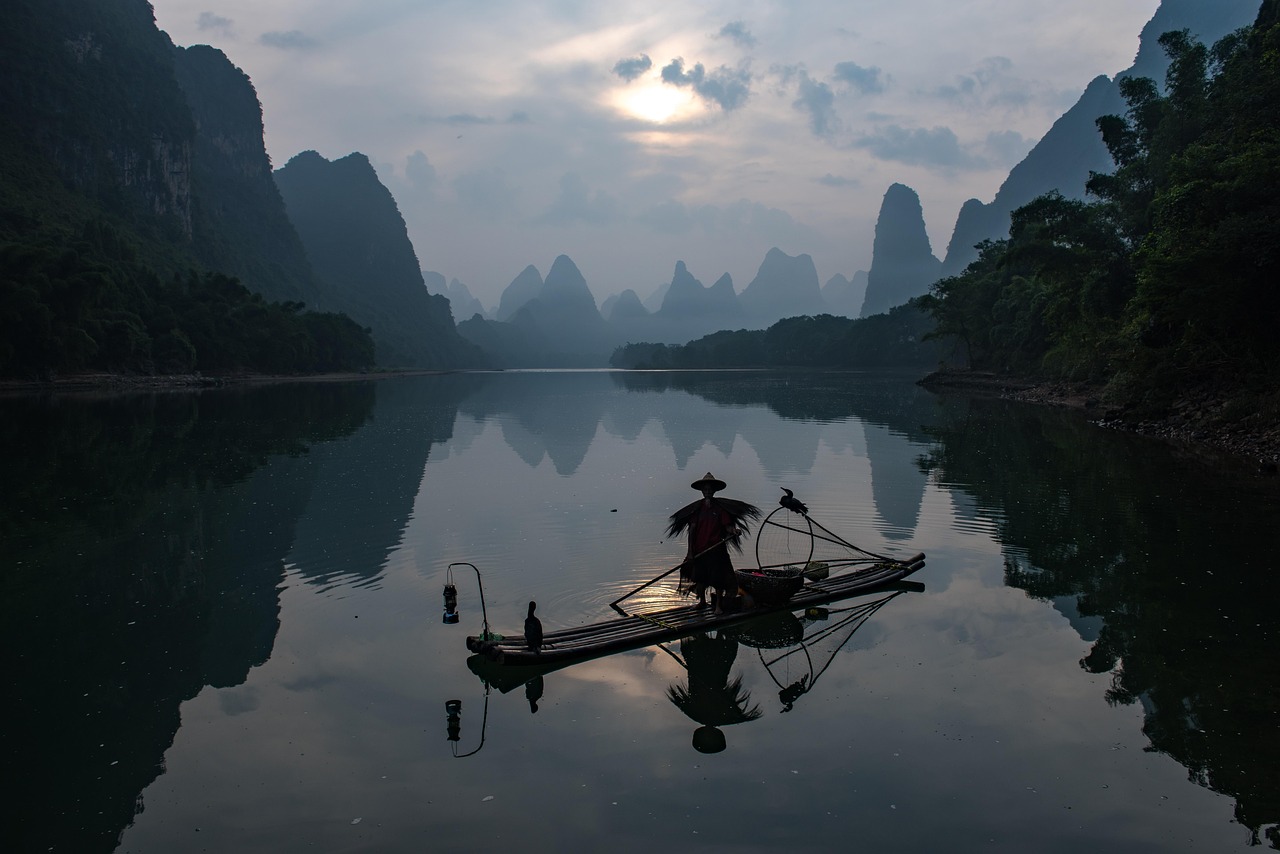
Day 3 is the heavy day: five stops at two hours each, ten hours in all. It opens with two hours in Xingping Ancient Town, moves to two hours for the Li River, continues with two hours at the Yangshuo Cultural Heritage Park, then two hours along the Ten-Mile Gallery, and finishes with two hours at the Yulong River.
Day 4 is the shortest and simplest: two hours at the Reed Flute Cave followed by two hours at the Elephant Hill Scenic Area — four hours in total, leaving the rest of the day open.
Trade-offs
Day 3 is where the schedule pinches, and it is the right place to trim. Five two-hour stops make a ten-hour day, and the two river stops — the Li River and the Yulong River — are the ones worth protecting. The cleanest cut is the Yangshuo Cultural Heritage Park, the only culture-led stop in an otherwise scenery-driven day; dropping it leaves four stops and gives the rivers room to breathe. If the rivers already deliver enough water-and-hill scenery, the Ten-Mile Gallery is the next stop to drop.
Day 4 is the flex point. At only four hours it works as a soft landing before departure, but anyone with a tighter exit can move the Elephant Hill Scenic Area up to Day 1 — which carries just six hours of stops — and keep Day 4 to the Reed Flute Cave alone. Travellers who find three terrace stops repetitive should also feel free to simplify Day 2 to the Longji Rice Terraces plus the Golden Buddha Peak Viewpoint, skipping the Jinkeng Rice Terraces.