Why this route
This route is a single west-to-east traverse of the corridor between the upper Yellow River and the Central Plains. It opens in Lanzhou at the Yellow River Iron Bridge, runs through Baoji into the Xi’an region, crosses Mount Hua, picks up Sanmenxia, and finishes in Zhengzhou. What ties the stops together is the material record of Chinese civilisation: a chain of six museums — the Gansu Provincial Museum, the Baoji Bronze Ware Museum, the Shaanxi History Museum, Emperor Qinshihuang’s Mausoleum Site Museum, the Sanmenxia Guo State Museum and the Henan Museum — interleaved with religious monuments that carry the same story forward, from Famen Temple through the Longmen Grottoes and White Horse Temple to the Grand Guanyin Temple.
The day split paces that theme deliberately. Days 1-3 are the measured approach: a riverside hour in Lanzhou, a museum and a night market, one four-hour mountain day at Kongtong Mountain, then a seven-and-a-half-hour Baoji day built around the bronze collection and two old streets. Days 4-6 deliver the imperial core — Famen Temple, the Shaanxi History Museum and Datang Everbright City, then the Terracotta Warriors at Emperor Qinshihuang’s Mausoleum Site Museum followed by Huaqing Palace — before a whole day is handed over to Mount Hua. Days 7-10 swing east into Henan: the heaviest timed day of the trip at Sanmenxia and the Longmen Grottoes, a gentler pairing of White Horse Temple and Kangbaiwan Manor, a full day in the Songshan Scenic Area, and a relaxed Zhengzhou wind-down.
Day by day
Day 1 opens in Lanzhou with one hour at the Yellow River Iron Bridge before the Gansu Provincial Museum, and ends among the stalls of the Zhengning Road Snack Night Market.
Day 2 is a single-stop day: four hours on Kongtong Mountain.
Day 3 belongs to Baoji — two hours at Xifu Old Street, three and a half hours at the Baoji Bronze Ware Museum, and two hours at Chencang Old Street, for seven and a half timed hours in total.
Day 4 stacks three hours at Famen Temple, a visit to the Shaanxi History Museum, and three hours at Datang Everbright City.
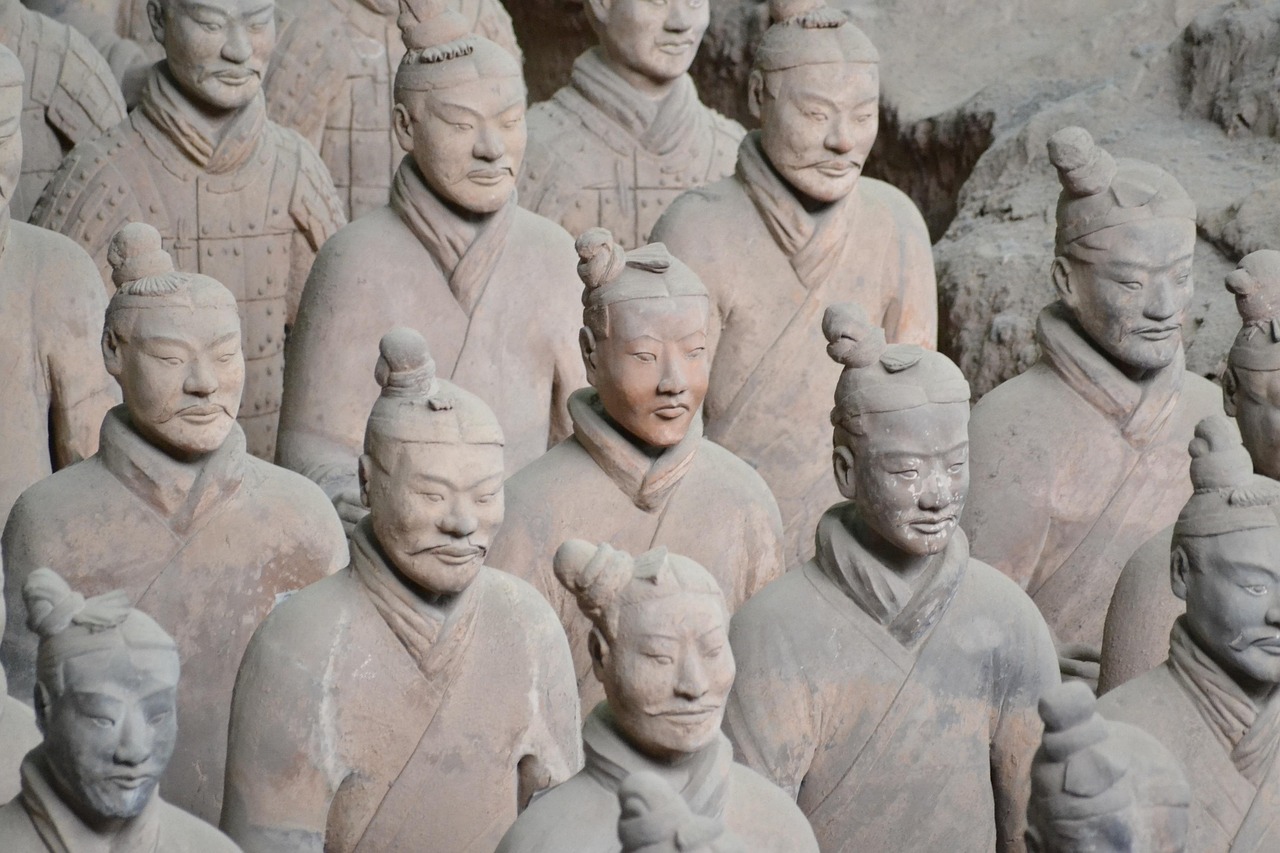
Day 5 gives four hours to Emperor Qinshihuang’s Mausoleum Site Museum — the Terracotta Warriors — followed by two hours at Huaqing Palace.
Day 6 is devoted entirely to Mount Hua.
Day 7 is the longest timed day of the route: two hours at the Sanmenxia Guo State Museum, two hours at the Shanzhou Dikengyuan sunken-courtyard village, then four hours at the Longmen Grottoes — eight timed hours in all.
Day 8 pairs three hours at White Horse Temple with a visit to Kangbaiwan Manor.
Day 9 is given over to the Songshan Scenic Area.
Day 10 closes in Zhengzhou with the Henan Museum, the Grand Guanyin Temple, and two hours at the Ruiguang Creative Factory.
Trade-offs
Day 7 is the schedule’s pinch point: eight timed hours across three stops. The clean adjustment is to cut the two Sanmenxia stops — the Guo State Museum and the Shanzhou Dikengyuan, two hours each — and go straight to the Longmen Grottoes, which halves the day. Day 4 is the other stack, with three hours at Famen Temple and three at Datang Everbright City wrapped around the Shaanxi History Museum; the Datang Everbright City block is the one to drop if the museum visit overruns.
The route also demands three mountain days — Kongtong Mountain (four hours on day 2), Mount Hua (day 6) and the Songshan Scenic Area (day 9). Travellers who do not want all three should cut Kongtong Mountain and keep the days at Mount Hua and Songshan, using the freed day to ease the Lanzhou-to-Baoji stretch. Museum fatigue is the other risk: with six museum stops between Lanzhou and Zhengzhou, anyone who prefers monuments to collections should simplify by trimming the Zhengzhou finale to the Henan Museum alone and dropping the Grand Guanyin Temple and the Ruiguang Creative Factory.