Why this route
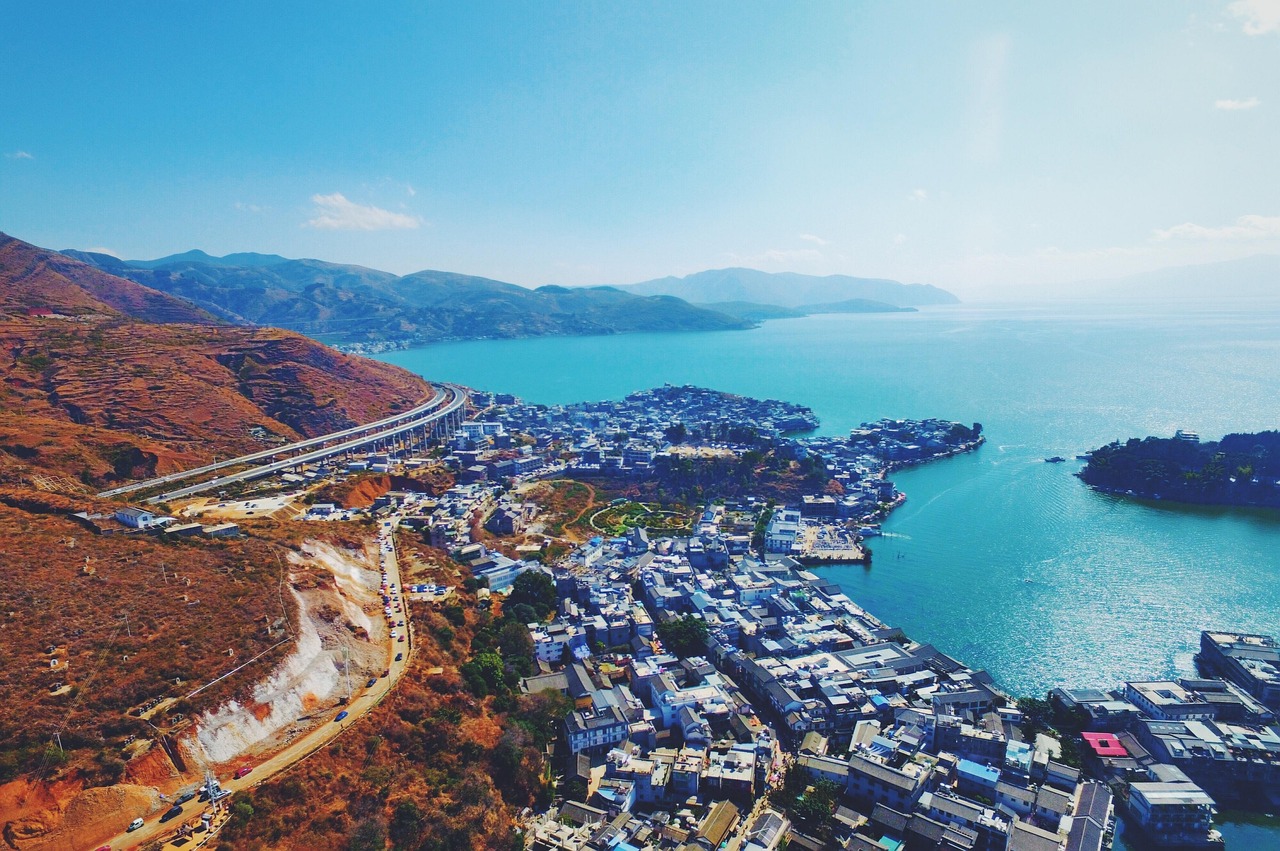
This itinerary is a landscape-led traverse of Southwest China, anchored in Dali and held together by a single theme: water and stone at their most dramatic. It opens with the city’s signature pairing of The CangShan Mountain and Erhai Lake, then lets one striking landform answer another — the Nujiang Grand Canyon, the volcanic and geothermal terrain of Tengchong Volcanic and Geothermal National Geological Park, and the border-straddling curiosity of One Village, Two Countries — before easing to a close at Dian Lake. Two ancient towns, Xizhou Town and Heshun Ancient Town, thread cultural interludes between the natural set pieces, so the route never strings two blockbuster landscapes together without a breather. Travellers consistently favour this alternating rhythm of scenery and settlement, and the stop order delivers it.
The day split does the pacing work. Day 1 is the heaviest, pairing two fixed three-hour anchors — The CangShan Mountain and Erhai Lake — for six hours of sightseeing. Days 2 through 4 each combine one three-hour anchor with a shorter or flexible stop, keeping every mid-route day inside a four-to-six-hour band, with Day 4’s single-hour finisher at Mangling Lone Tree Forest making it the lightest of the paired days. Day 5 then closes with just one flexible stop, one to three hours at Dian Lake, a deliberate soft landing after four fuller days.
Day by day
Day 1 belongs entirely to Dali’s twin icons. The CangShan Mountain takes the first three hours, and the route then turns from mountain to water for three hours at Erhai Lake. At six hours in total this is the fullest day of the five, and it sets the pattern the rest of the route follows: one major stop, then another.
Day 2 opens with a flexible one to three hours at Xizhou Town before committing a full three hours to the Nujiang Grand Canyon. The town-first order gives the day a quiet start and a dramatic finish, with the canyon as the clear centerpiece.
Day 3 runs the same rhythm in reverse. Heshun Ancient Town holds the fixed three-hour slot, and Tengchong Volcanic and Geothermal National Geological Park follows with a flexible one to three hours — the only volcanic and geothermal stop on the route, and a sharp change of texture from the canyon the day before.
Day 4 is the borderland day and, at four hours, the lightest of the paired days. One Village, Two Countries takes three hours; its name is the experience in miniature, a single village shared across an international boundary. Mangling Lone Tree Forest — one tree spread into a grove — closes the day with a single hour.
Day 5 is a one-stop finish: one to three hours at Dian Lake, the route’s second great lake and a quiet bookend to Erhai Lake on Day 1.
Trade-offs
The cleanest cut is Day 5 itself. Dian Lake is that day’s only stop and carries the softest commitment on the route at one to three hours, so dropping it turns the plan into a four-day itinerary without touching a single three-hour anchor. Within Day 4, Mangling Lone Tree Forest is the natural first sacrifice — at one hour it is the shortest stop of the five days, and trimming it leaves One Village, Two Countries to carry the day on its own.
The schedule’s flex sits in the two one-to-three-hour stops, Xizhou Town on Day 2 and the Tengchong geological park on Day 3. Held to their short end, they bring both days down to roughly four hours of sightseeing; stretched to the full three hours, they fill the same days out to six. Travellers who find the opening day heavy should not try to shave Day 1, since both of its stops are fixed at three hours — the better move is to bank time on Days 2 and 3 and let the flexible stops absorb the pace.