Why this route
These twelve days run the classic first-timers line with one deliberate substitution: where the fourteen-day route turns south to the Li River, this one stays inland and finishes the southwest with Zhangjiajie. Beijing, Xi’an, Chengdu, Zhangjiajie, Shanghai — five anchors, one direction, and every inter-city leg still a morning. The day-by-day detail for the three shared cities lives on the China 14 Day Itinerary; this page runs them on a tighter clock and gives the saved attention to Zhangjiajie, the city most travelers have never planned in detail.
The five anchors: The Palace Museum and the Great Wall at Mutianyu in Beijing; the Terracotta Army at the Emperor Qinshihuang’s Mausoleum Site Museum; the Chengdu Research Base of Giant Panda Breeding; the Yuanjiajie pillar forest with Tianmen Mountain as its bookend; and The Bund closing the line on the coast.
The day split gives Beijing three, Xi’an two, Chengdu two, Zhangjiajie two and Shanghai three. Beijing and Shanghai keep the longest blocks because they hold the arrival and departure energy; Chengdu compresses to two days without losing its panda anchor; Zhangjiajie gets two full days because the national park and Tianmen Mountain each need one, and squeezing both into a single day is the mistake this route exists to prevent.
Day by day
Days 1 to 3 are Beijing: Tiananmen Square, The Palace Museum and Jingshan Park in one line on Day 1; the Great Wall at Mutianyu — Badaling if you want the classic — on Day 2; and The Temple of Heaven on Day 3 with whatever remains of the afternoon.
Days 4 and 5 run Xi’an. Day 4 is the Emperor Qinshihuang’s Mausoleum Site Museum. Day 5 walks the Xi’an City Wall and finishes in the Muslim Quarter, with the Big Wild Goose Pagoda as the evening option.
Days 6 and 7 are Chengdu, compressed but not clipped: the panda base morning at the Chengdu Research Base of Giant Panda Breeding with Jinli Ancient Street after, then the alleys of Kuan Alley and Zhai Alley and the tea houses of People’s Park on Day 7.
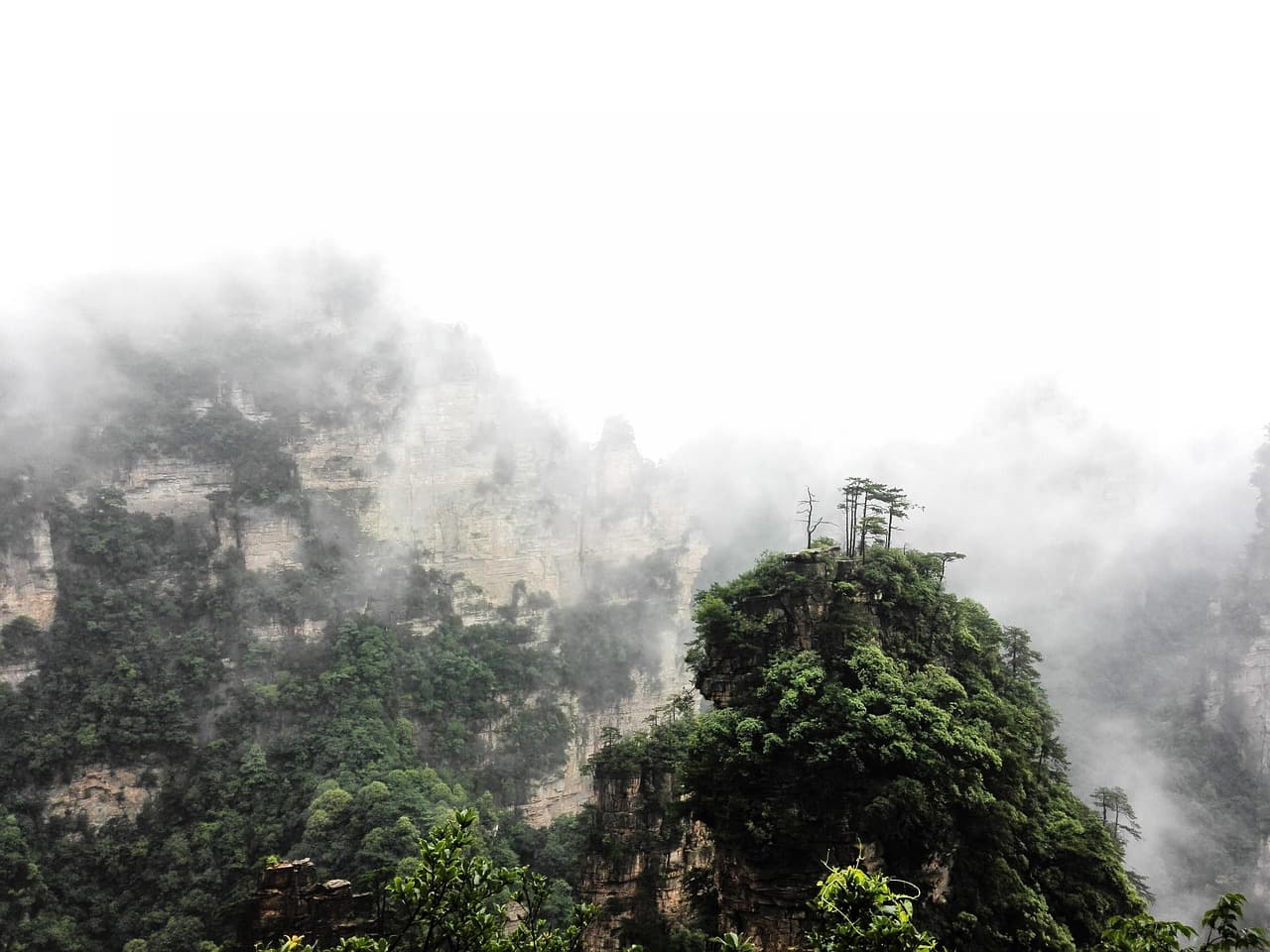
Days 8 and 9 are Zhangjiajie, and they split cleanly. Day 8 is the national park: the pillar corridor of Yuanjiajie, the First Bridge under Heaven between the peaks, and the valley floor of the Ten-Mile Gallery on the way down. Day 9 is the mountain in town: the long cableway up Tianmen Mountain, the cliff-hung Ghost Valley Plank Road, and the natural arch of Tianmen Cave — the full day-by-day options for the region live on the Zhangjiajie Travel hub.
Days 10 to 12 close in Shanghai. Day 10 walks The Bund and Nanjing Road. Day 11 goes to the old town — Yu Garden and The City Temple. Day 12 is the open day and the flight out.
Trade-offs
The Guilin-for-Zhangjiajie swap has a price, and it is worth naming: no Li River boat, no Yangshuo countryside, and a trade of water for stone. What the swap buys is the single most vertical landscape in the country and a route that skips the season when the river mist closes the boat views. Travelers who want both should look at the China 14 Day Itinerary or, for pillars plus pandas without the northern anchors, the 8 Day Southwest China Itinerary.
The cut candidates run the same as every line in this family. Shanghai’s open Day 12 is the first to go if the trip must fit eleven; Xi’an’s second day compresses to a wall walk and an early train; Beijing’s Day 3 is the softest of the three Beijing days. Zhangjiajie’s two days should survive every cut — if a third day ever appears, it belongs to Baofeng Lake and the Ten-Mile Gallery redo, not to a fifth city.
The legs need one honest note. Beijing to Xi’an, Xi’an to Chengdu and Chengdu to Zhangjiajie are all straightforward morning runs on the rail map. Zhangjiajie to Shanghai is not — it is the longest leg on the route, and the flight usually wins. Book it early, keep Day 9’s Tianmen plan flexible on timing, and treat the evening of Day 9 as the real start of the Shanghai block rather than the end of the Zhangjiajie one.